

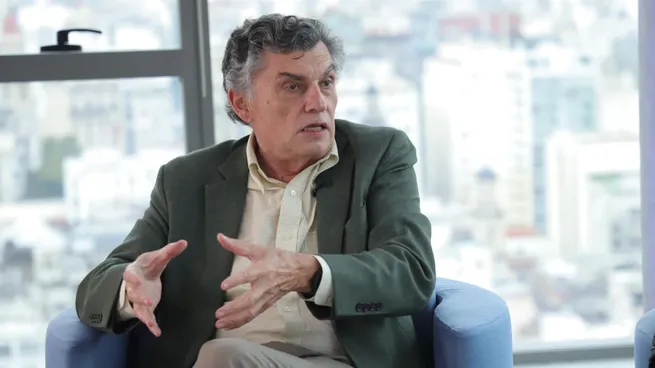
The CEO of BAS Storage described the situation as “a flight to quality” while participating in the third panel of Ámbito Debate on Finance & Investments.
- The Dollar as a Safe-Haven Asset and the Opportunity to Enter the International Debt Market
- Investor behavior and the reality of credit in a climate of caution
Marcos Victorica, CEO ofBAS Storage, highlighted the boom in storage amid growing investor interest in physical assets during his participation inthe third panel ofÁmbito DebateonFinance & Investments, moderated byJuan Strasnoy Peyré, Ámbito’s journalist specializing in economics and finance.
Victorica commented on the current situation and drew a comparison:“In Argentina, we’re used to living on a roller coaster, so a cobblestone street seems smooth to us. The roller coaster is the peso, and the street is the dollar, which has been depreciating for a long time.”
In that regard, he pointed out that“if in 1964 you had a dollar bill to buy a house, today you have 5 cents,”and then introduced a new concept:“On Wall Street, instead of a ‘flight to quality,’ there is a ‘flight to assets.’”
“People want to start acquiring physical assets because they’re what protect you from the dollar’s devaluation,”he explained, adding to that picture “the U.S. economic and financial situation, where the government owes a ton of money and, with current interest rates, has a massive quasi-fiscal deficit that forces it to print money and fuels inflation.”
The “subsidy” to the United States via the dollar
In the same vein, he asserted that“Argentina subsidizes the United States,”referring to the so-called “mattress dollars.” “With the more than $100 billion we have, we subsidize the U.S. government by between $5 billion and $7 billion each year due to the value that is lost,” he stated.
Victorica added that “those dollars represent only a small percentage of the actual amount,” noting that“Argentina and Russia are the two countries with the largest amounts of dollar bills in the world, and this is due to a lack of confidence in the local currency, not a lack of economic activity.”
Mistrust of the peso and tensions in the U.S.
“There are 5, 10, or 15% of people who are willing to put their money to work, but most want to keep their savings safe,” he said, adding:“If you look at capital outflows from Argentina—including cash stashed at home and funds held abroad—the Argentine financial system is extremely solid. The thing is, we’re exporting the financial system to accounts in other countries, to assets abroad, or to dollars stashed under the mattress because we don’t trust the peso.”
The BAS spokesperson noted that “this has been going on for 40 or 50 years” and, looking ahead, suggested that“turning this around means regaining confidence in the peso, which will take at least 5 or 10 years, because it takes time to rebuild trust, and that is the process we are currently in.”
Meanwhile, Victorica pointed to the end ofFederal Reserve (Fed) ChairJerome Powell’s term. “He has openly opposed lowering interest rates—one of the factors that has severely hurt the U.S. economy since 2023, with sky-high interest rates that were perhaps initially justified by the money injected during the pandemic and could have begun to come down in 2023,” she noted.
Noting that “there is now a political problem” between Powell and Trump, he said,“I would wait to see who the new Fed chair is and whether the rate will be cut further. Before the Iran situation, the expectation was that it would be cut by three-quarters or half a point.”
The Storage Boom
When it comes to investing, Victorica offered an alternative to the various market securities, one that involves investing capital inthe self-storage industry in the United States. “Ten years ago, we created a special product for Latin Americans who want to convert their dollars into a safe, automated asset without having to do anything or take on any risk.We entered the self-storage industry, which is a mass-market sector,”he explained.
The BAS representative noted that in the U.S., “there are more buildings than all the Walmarts, Starbucks, and McDonald’s combined, serving 35 million people,” and added:“What we did was convert it into a condominium so that people can invest starting at $50,000 with an easy exit strategy and a secure lease agreement.”
“This has been very successful for us, and we’ve created a bridge for people who have dollars but aren’t sure how to invest them in the United States, because an apartment in Miami isn’t always a good investment—it depends on the timing,” he explained regarding his proposal.
At the same time, he noted that the product“is for those who want to avoid surprises or make part of their portfolio more secure,”explaining that “it allows investors, with zero involvement and a 100% automated process, to own real estate that appreciates in value in the U.S.”
“Once you deposit the money, since the buildings are up and running and occupied, that’s when the rental income starts coming in.We’re paying a net 7%, which is more than double what an American bank pays you. The second year it’s 6%, and then it adjusts. But the buildings also appreciate in value because you store things in the storage units, and the volume of stored items grows much faster than the population. In other words, the demand for storage grows much faster than the demand for housing,” he explained regarding the proposal.
The end of coins as we know them?
The panel concluded with a discussion of the dollar’s potential loss of global influence. For Victorica,“the question isn’t whether it will be the dollar or the yuan; it’s whether currencies will continue to exist as we know them,”and he admitted, “What I’m saying sounds crazy, but today no one can imagine going a day without a cell phone, and just a few years ago, they didn’t even exist.”
“If you remove certain regulations, currency becomes less and less necessary. Banks, if you remove the laws governing them, have no reason to exist. There is a technological shift far more profound than the invention of the printing press, which changed the entire world,” he argued, adding that “the lack of vision on the part of the institutional counterpart is striking, because the production model is completely different.”
It is true that, without fail,the dollar ultimately prevails over the peso. But it is also true that this strength is relative, and that the U.S. currency is not immune to the ups and downs of the global economy. A simple example suffices to illustrate this situation: in 1964, $20,000 was enough to buy an average home inthe U.S.; by the year 2000, that figure had risen to $120,000; and today, a buyer needs $400,000 to purchase a similar property.
According to the Bureau of Labor Statistics’ CPI,the dollar’s purchasing power declined by approximately 83% between 1975 and 2025. Meanwhile, the DXY Index, a financial indicator that measures the dollar’s value against six other currencies, fell by about 10% in the first half of 2025, marking its worst performance in 50 years. The international context marked by conflict also does not allow for predictions of stability in the near future, and even consulting firms such as Morgan Stanley have anticipated greater volatility for the U.S. dollar in 2026.
Paradoxically,it is foreign savers who suffer the most from this situation. They have no access to fiscal stimulus measures or social programs financed by the Fed’s money supply expansion, nor can they obtain cheap credit in dollars. As the Cantillon Effect suggests, expanding the money supply enriches those closest to the creation of money and impoverishes those furthest from it. Small and medium-sized savers represent the last link in this monetary chain.
Dollars kept under the mattress do nothing but lose value year after year, regardless of their current or historical exchange rate against the peso. The data shows that a dollar kept in savings is a dollar sitting idle and, therefore, a loss of capital. Generating returns is the only proven method to counteract the devaluation of money, and to generate them, it is necessary to put savings to work.
Contrary to what common sense—shaped by a lack of financial literacy—might suggest, investing is not a risk but a protective measure. It is worth noting that investing is not necessarily synonymous with the stock market. As the example of real estate demonstrates,there are assets that serve as a safety net without exposing investors to the frenetic pace of the stock market.
To give just one example, storage facilities that were worth $5 million 25 years ago are now worth nearly $20 million. Those who invested in them made a profit and avoided risk, as they are part of a mass-market industry in the U.S. with transparent valuations and a massive market.
The dollar remains the world’s dominant currency, but it is no guarantee in and of itself: this is the key point savers need to keep in mind. Those who understand this will be better equipped to weather volatility. Those who do not run the risk of getting caught up in a cycle reminiscent of the myth of Sisyphus, condemned to push a boulder uphill forever, only to watch it roll back down again and again.
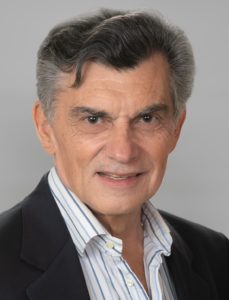
Marcos Victorica is Founder and CEO of BAS STORAGE.
Company that is revolutionizing the American real estate market by creating a product based on the American economic infrastructure.