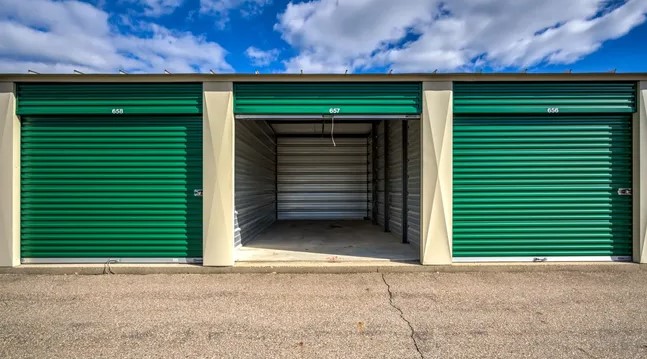
Self-storage is one of the strongest segments of the U.S. real estate market. The storage industry generates $35 billion a year, and one in five Americans use storage facilities to store their belongings. However, the industry has not yet reached its peak, and there is one trend that promises to increase its reach: the subdivision of buildings into self-contained units.
The condo-storage model: innovation and new opportunities
The condo-storage business model represents a breath of fresh air for the storage industry. It is a reformulation of an established product, allowing the market to expand towards new types of publics. Indeed, the subdivision of buildings into units makes it possible for small and medium-sized investors to join this business, with capital outlays starting at around USD 50,000.
This reconfiguration of storages marketing does not imply the replacement of one type of target investor by another, but constitutes a market innovation. In other words, a strategy whereby a business introduces a novelty that allows new segments to be incorporated. The possibility of acquiring storage units and scaling the investment progressively increases the segment's alternatives in terms of costs and, therefore, favors its expansion.
High standardization: storage as a commodity
Another characteristic that makes the consolidation of this model possible is its high degree of standardization. Condo-storage generates products that function in a similar way to a commodity: storage units are serialized assets, practically identical to each other and combinable. This makes them easy-income and easy-out goods, since, unlike other real estate properties, their commercialization depends on their objective utility and not on their subjective attractiveness. So much so that, on many occasions, those who acquire these properties do not consider it necessary to meet them in person before buying them.
Like commodities, self-storage is increasingly chosen by investors seeking to build diversified portfolios. In contexts of financial volatility, strategies such as those proposed by the Yale endowment model, according to which a successful portfolio must allocate at least 20% to alternative assets, gain relevance. Various calculations indicate that this formula can double the returns of traditional portfolios.

Higher yields
Condo-storage has even proven to have the capacity to generate even higher profits than those offered by US Treasury bonds, an asset historically chosen by those who wish to minimize risks and ensure profits. This is the case of the storage units marketed by the company BAS Storage, owned by Argentine businessman Marcos Victorica, which in a ten-year period generated more than double the profit produced by such bonds in the same period.
The key: depend on production, not population
One of the keys to the success of this industry lies in its dependence on production growth, not population growth. As long as the U.S. remains one of the most productive countries in the world, it will continue to generate a surplus to store, and the self-storage business will continue its upward trajectory. Storages are assets deeply rooted in American culture, as necessary to the country as airports and highways.
The condo-storage not only represents a reconfiguration within the sector, but also a new range of possibilities for the modern investor.